
Unveiling the Foundation of your new home
Blog post description.
NEW CONSTRUCTION
4/16/20242 min read
Unveiling the Foundation of Your Dream Home
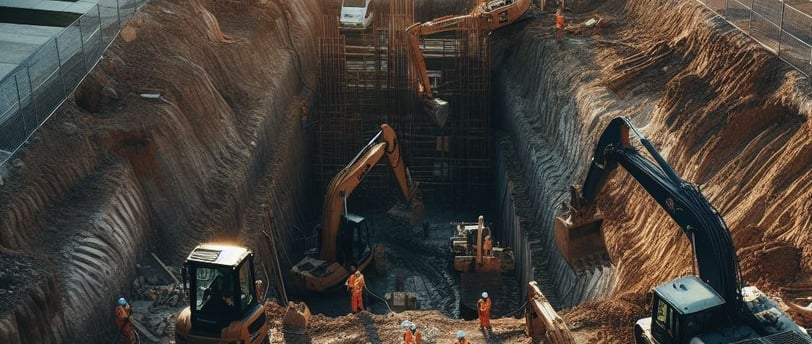
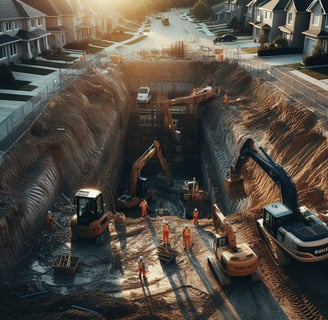
Building a house is a dream for many, but before the walls rise and the roof takes shape, there's a crucial first act: the excavation, or "big dig" as it's often called. This intricate process involves removing the earth to create a level and stable foundation for your future home. Let's delve into the steps involved, the equipment used, and the importance of safety considerations.
A Step-by-Step Guide
The first step involves surveying the land and marking the designated excavation area according to the building plans. This ensures the precise location and dimensions of the foundation are established.
Stripping the Topsoil: Using excavators, and large tracked machines with digging arms, the contractor carefully removes the topsoil layer. This nutrient-rich upper layer of soil will be stockpiled for later use in landscaping projects around your new home.
Reaching Base Level: This is where the real digging begins. Guided by engineers' plans and laser levels, the excavator removes soil to achieve the designated depth for the foundation walls and basement.
The depth can vary depending on several factors:
Soil Conditions: The type of soil on your property plays a role. Sandy soils might require a shallower depth compared to clay soils with lower load-bearing capacity.
Local Building Codes: Specific depth requirements might be stipulated in your local building codes to ensure structural stability.
Hauling Away the Excess: The excavated soil is loaded onto dump trucks and hauled away for proper disposal or use on other construction projects.
Shoring Up the Sides: Depending on the depth of the excavation and soil stability, temporary shoring might be necessary. These support structures, often made of wood or steel, prevent cave-ins and ensure worker safety.
Building a Rock-Solid Base: Basement Stability and Soil Testing
The foundation, especially the basement if you have one, is the backbone of your home. Here's how stability is ensured:
Soil Testing: Before excavation begins, comprehensive soil testing is conducted. These tests analyze the soil composition, strength, and bearing capacity. The results of these tests are crucial for determining the appropriate foundation type (basement vs. slab) and depth to ensure the structure can safely support the weight of the house.
Piles: A Foundation on Extra Support: In some cases, depending on the soil conditions and the weight of the structure, additional support might be needed. Load-bearing piles, essentially deep foundation elements driven into the ground, can be used to transfer the weight of the building to a more stable layer of soil. The need for piles will be determined by the soil tests and recommendations from a structural engineer.
The Big Dig: A Foundation for Your Dream
The big dig is the vital first step in building your dream home. By meticulously removing soil, ensuring safety, and relying on soil tests, a stable foundation is laid for your future abode. In the next blog post, we'll explore the construction of the foundation walls and how this critical element provides the structural support for your dream home.